A year of planning and we are finally in Rome! I’ve dreamed of visiting the eternal city all my life. All of the planning and research do not prepare you for the reality of travel in a bustling metropolis like Rome.
We arrived at the Leonardo da Vinci–Fiumicino Airport and made our way to terminal 3 to purchase tickets for the train to the Termini train station in the center of Rome. The walk is about 10-15 minutes. The train tickets cost €12, and the duration of the ride is about 30 minutes. Once we arrived at Termini, we found a cab to take us to our Airbnb. This is where it gets a little tricky. Official metered city cabs are in the main entrance. Do not be fooled by the “not so honest” cab drivers who pray on inexperienced tourists. Unfortunately, we were taken by one of those cab drivers, and our cab ride was double what it should have been. Mistake #1.
Modern Rome is a vibrant city that seamlessly blends its historical legacy with contemporary life. Wherever you go in the city history unfolds before you with ancient ruins, such as the Colosseum, the Roman Forum, and the Pantheon, which attract millions of tourists each year. Trying to see everything within a short visit, mistake #2. Rome is a city to be savored and patiently explored. Get ready to walk a lot!
Our first tour was of the Colosseum. It’s important to purchase skip the line tickets for any attraction you plan to visit, otherwise, you will be standing in line for many hours. Getting a guided tour is also well worth the money. There are many options at different price ranges depending on the size of the group. Our go to for tours is Viator and Get Your Guide. I suggest you download these apps to book your tours. Make sure you see some of the reviews, and how many good reviews a tour receives before you choose the one that’s right for you. Having your tickets reserved ahead of time will make your experience easy and enjoyable.
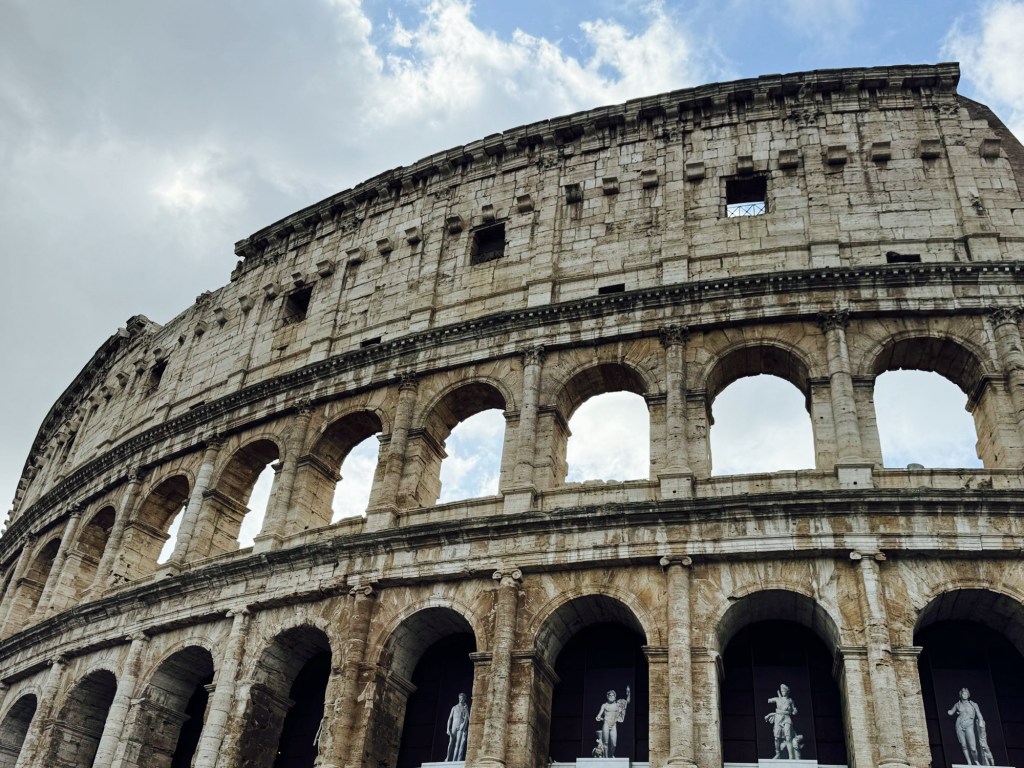
The Colosseum is one of those places that instantly takes your breath away. Imagine stepping into a massive arena that once held up to 50,000 cheering spectators. Built nearly 2,000 years ago, around 70-80 AD, this iconic amphitheater was the stage for epic gladiator battles, thrilling animal hunts, and even mock naval battles when the arena was flooded.
Walking through its grand arches, you can’t help but feel a connection to the past. You can almost hear the roar of the crowd and see the gladiators preparing for combat. Our tour guide brought to life what a typical event would look like. Seating was reserved depending on your class. The Colosseum was a meeting place for families, romantic courtships, political discussions, and events that satisfied the bloodlust of the times. Despite the centuries that have passed, the Colosseum still stands tall as a testament to Roman engineering and architectural mastery.
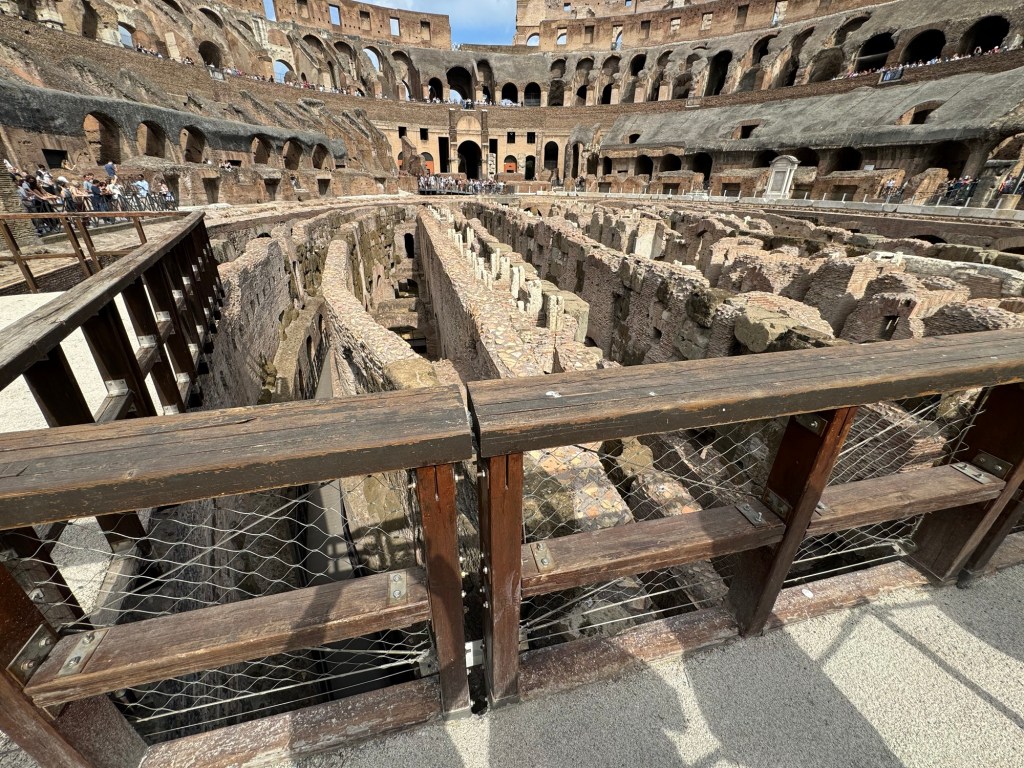

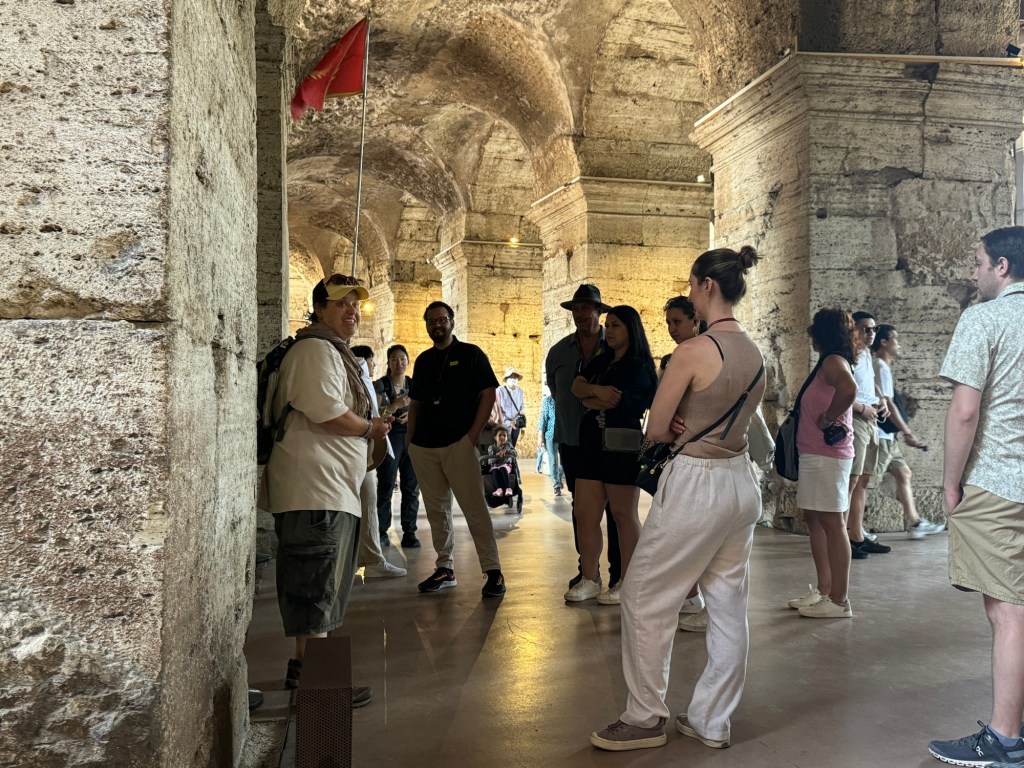

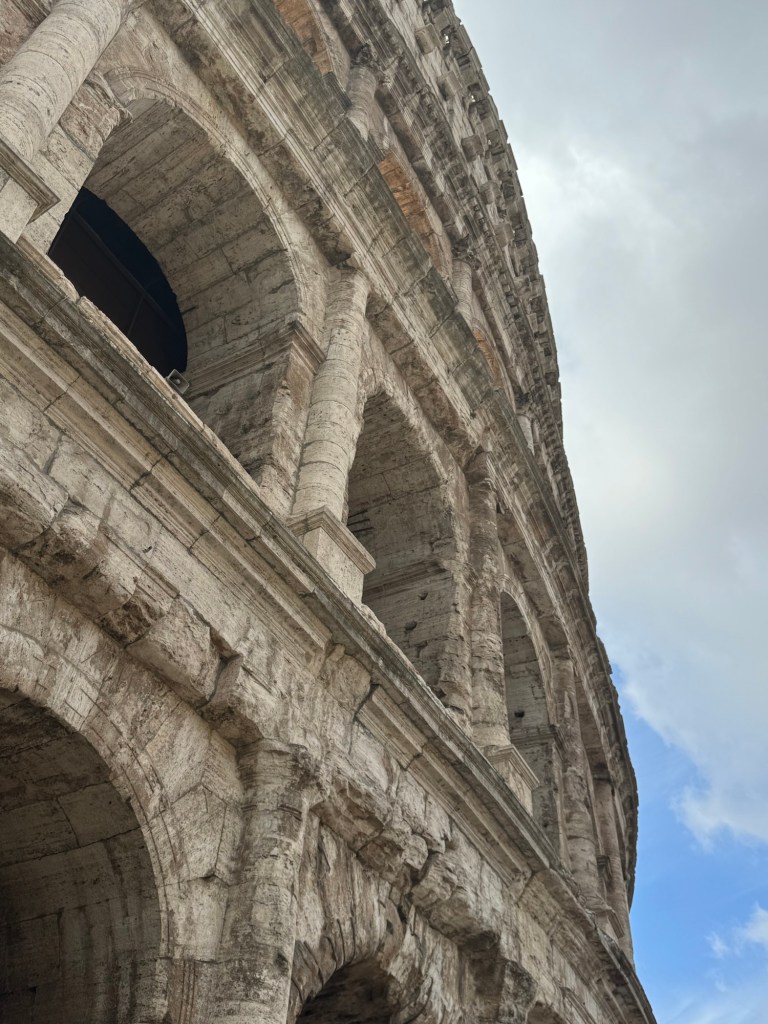
It’s not just the size that impresses; it’s the intricate details too. The Colosseum’s design is both functional and beautiful, with its tiered seating, underground passages, and the sophisticated system of pulleys and elevators that brought wild animals and gladiators into the arena.
Visiting the Colosseum is like stepping back in time. You walk where emperors and Romans of all walks of life once stood, and experience a piece of history that’s both humbling and awe-inspiring. It’s a reminder of Rome’s incredible past and a must-see for anyone who wants to feel the heartbeat of ancient history right in the middle of a modern city.
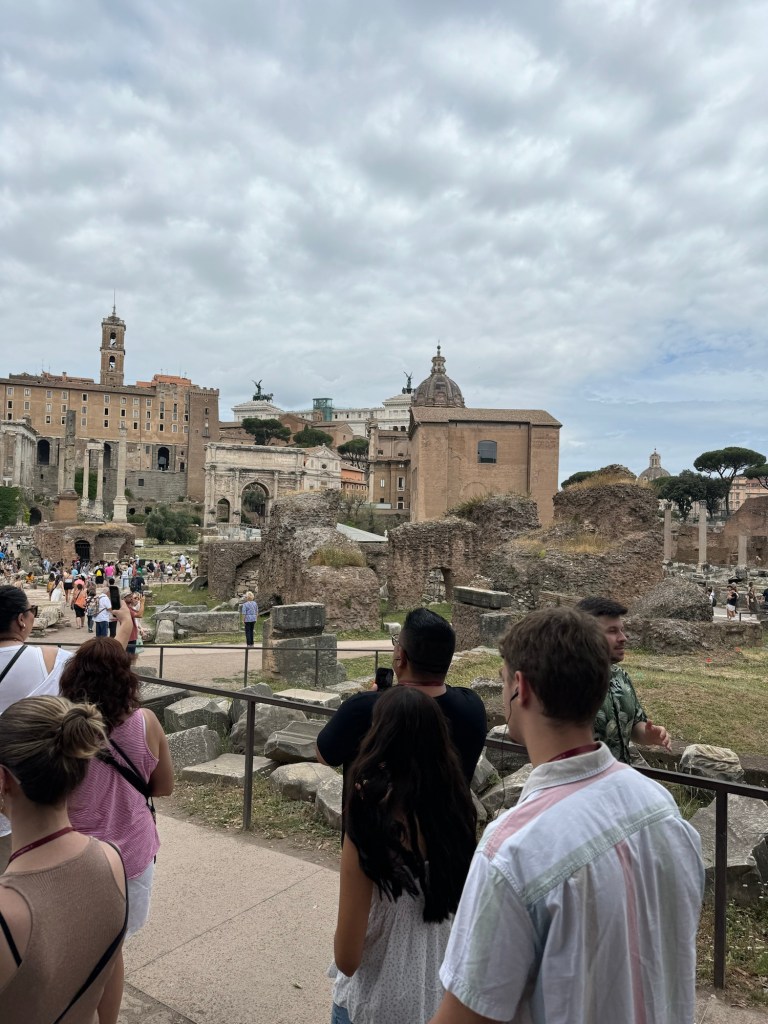
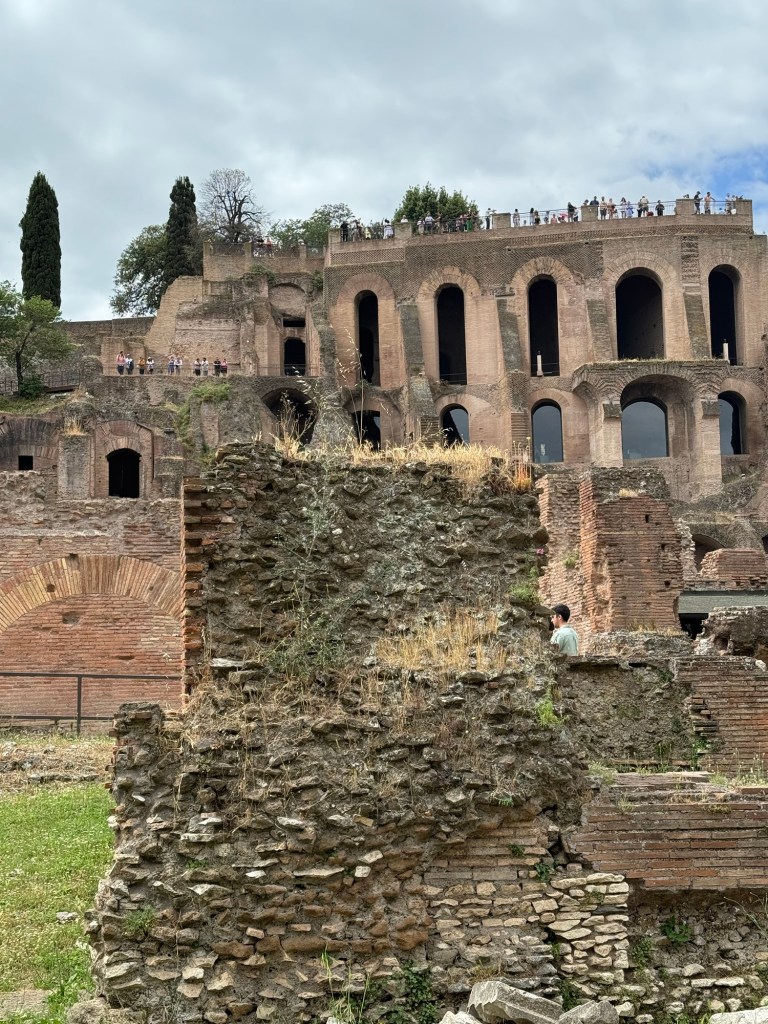
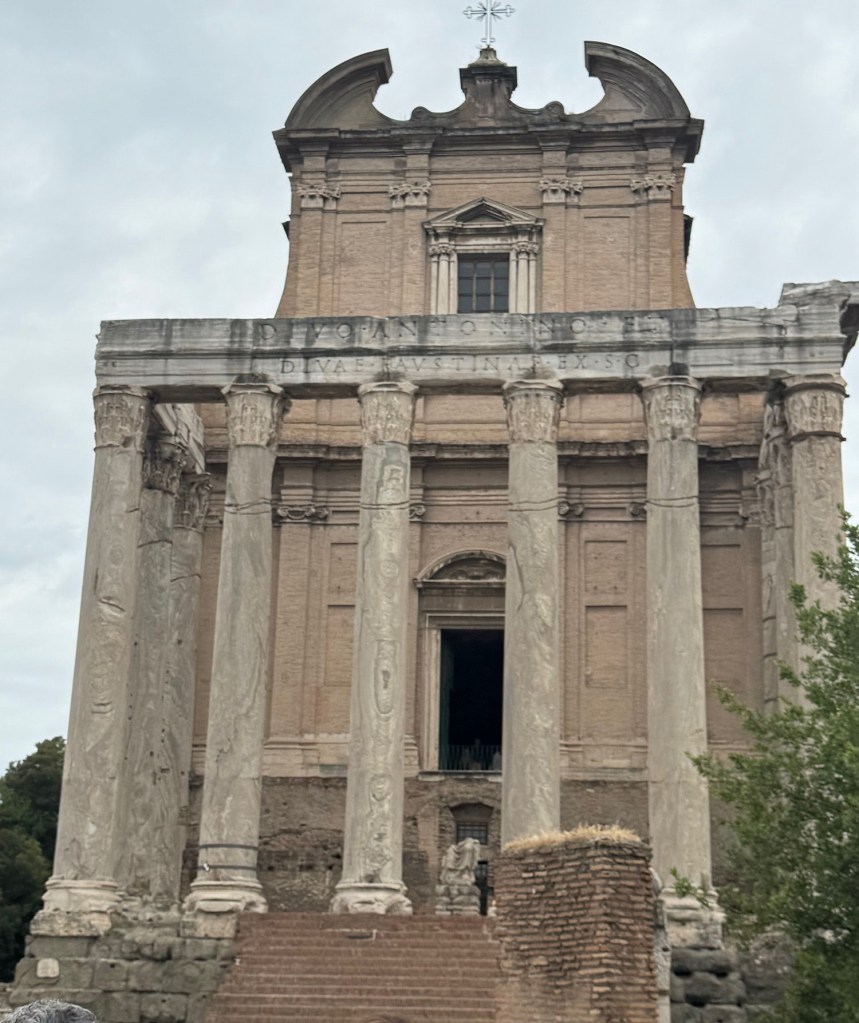
Almost every tour to the Colosseum includes entry into the Roman Forum. The Roman Forum is right next to the Colosseum and it is a marvel of Roman history. The ruins depict a time of abundance, wealth, and power. The Forum was the heart of ancient Rome, serving as the center for public life, politics, and commerce. It was a bustling area filled with temples, government buildings, and marketplaces. Today, it’s a vast ruin that tells the story of Rome’s past glory.


On our first visit to this beautiful city, we did not expect the amount of tourists we encountered. We had a plan to beat the crowds to explore the iconic Trevi Fountain. We set our alarm for 5:00 a.m. Who does that on vacation? Well it seems many do that on vacation, because we arrived at Trevi Fountain at about 6:15 and it was already packed with tourists. Beautiful people posing to get that perfect instagram photo, brides and grooms taking professional wedding pictures, families, and couples in love. We took our turn to take our perfect picture in front of the fountain.
If you like old movies, watch La Dolce Vita, where director, Federico Fellini, made the fountain a star in the iconic scene the movie is famous for.

The Trevi Fountain is a stunning Baroque fountain that’s famous for its beauty and the tradition of tossing coins into it. Completed in 1762, the fountain features a majestic sculpture of Neptune, the god of the sea, surrounded by other mythological figures. It’s said that if you throw a coin over your left shoulder into the fountain, you’ll ensure a return to Rome. Who am I to break tradition. I too joined the rest of wishful travelers and tossed a coin over my left shoulder, securing our return to the eternal city.
When in Rome, you must get lost! On our first day we underestimated how immense this city is. With 496 square miles, Rome is approximately the size of New York City. Many of the neighborhoods we visited reminded me of NY. It was impossible to explore in just three days all that Rome has to offer in its diverse neighborhoods, but there were two we loved and got to know well.
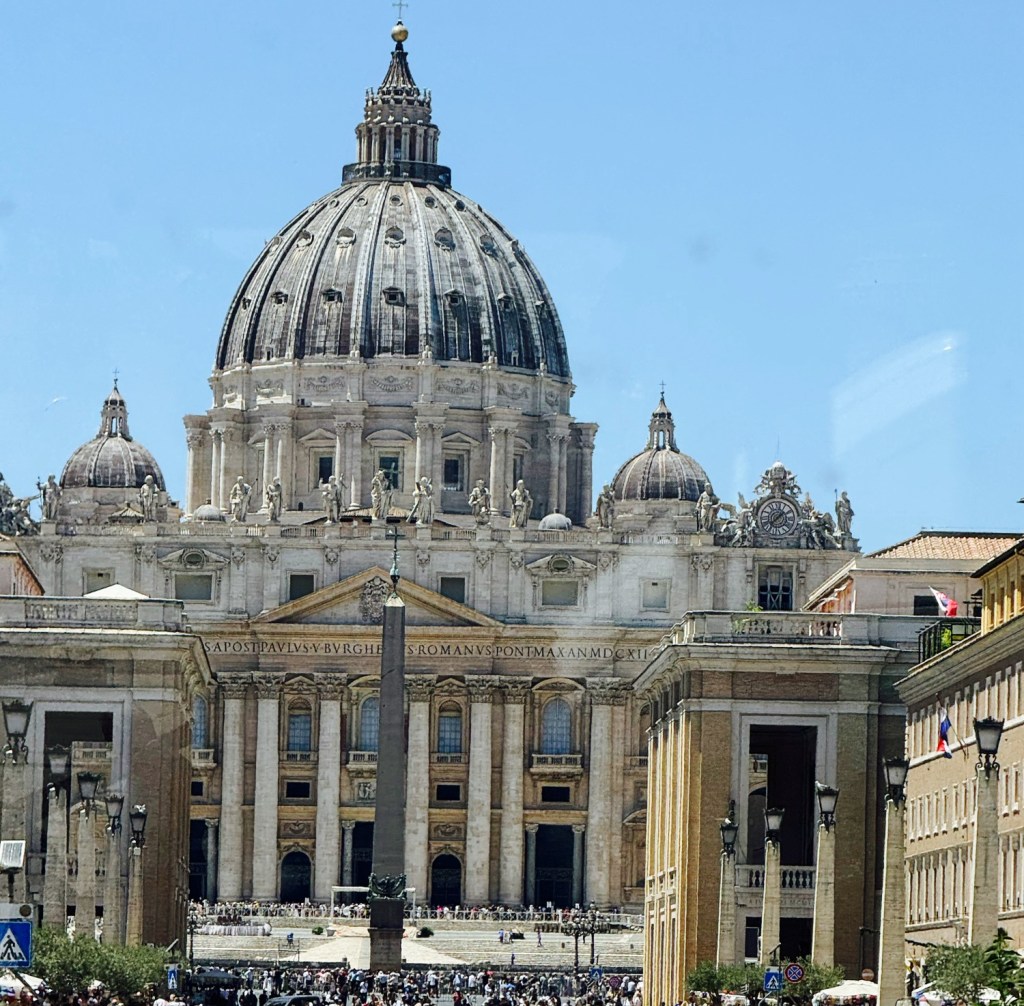
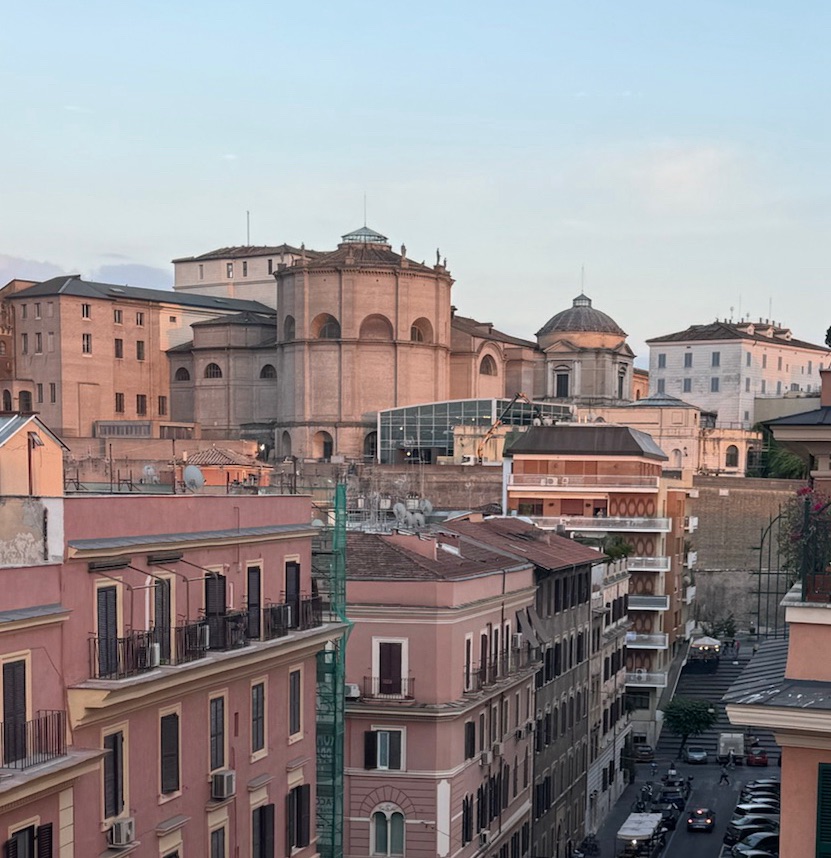
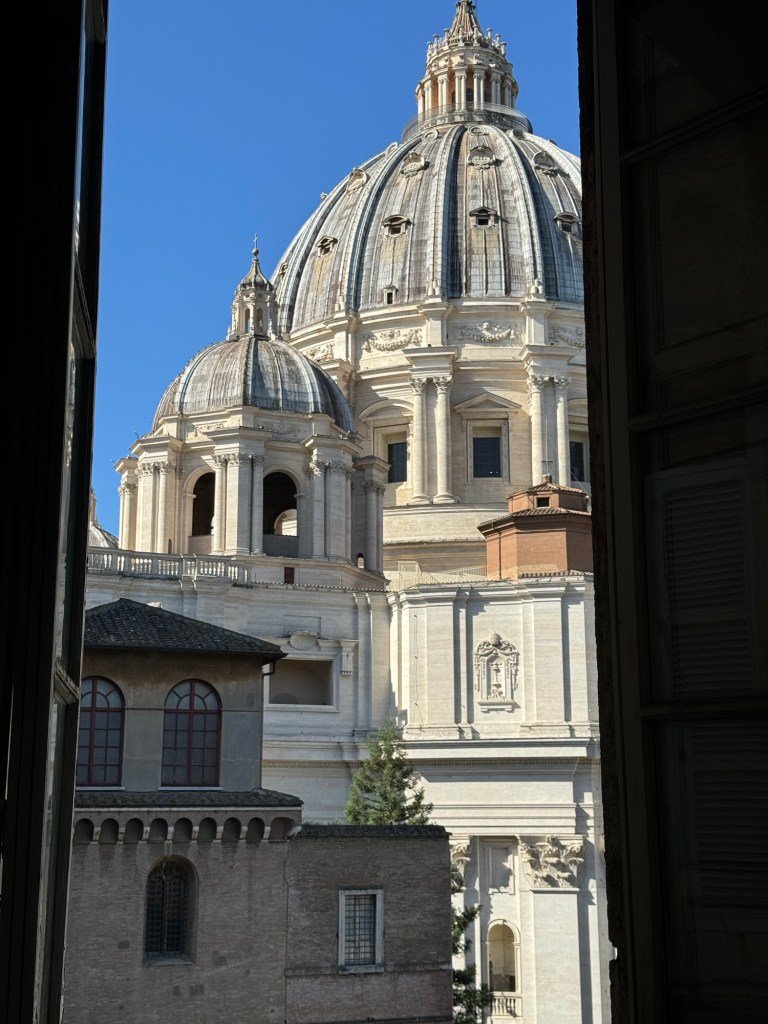
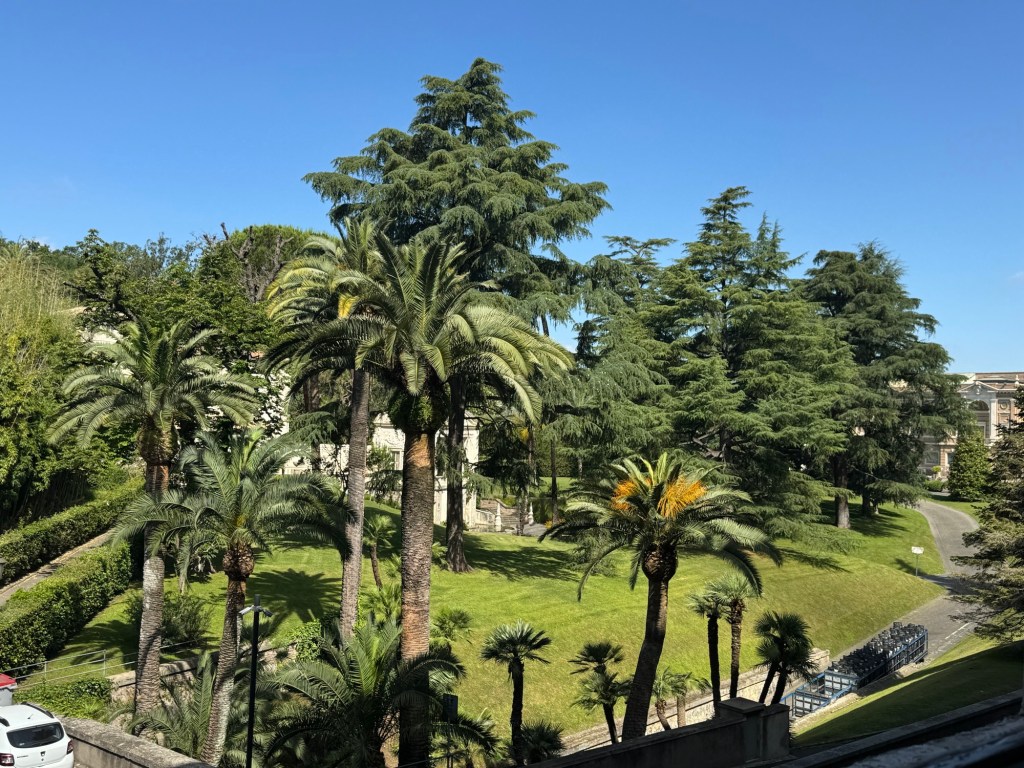
Prati is a residential neighborhood that borders the Vatican. With many elegant homes and quaint streets, this area is filled with authentic local restaurants and a high end shopping district. Our Airbnb was a short three minute walk to the Vatican Museum, and the museum and Vatican walls could be seen from our balcony.
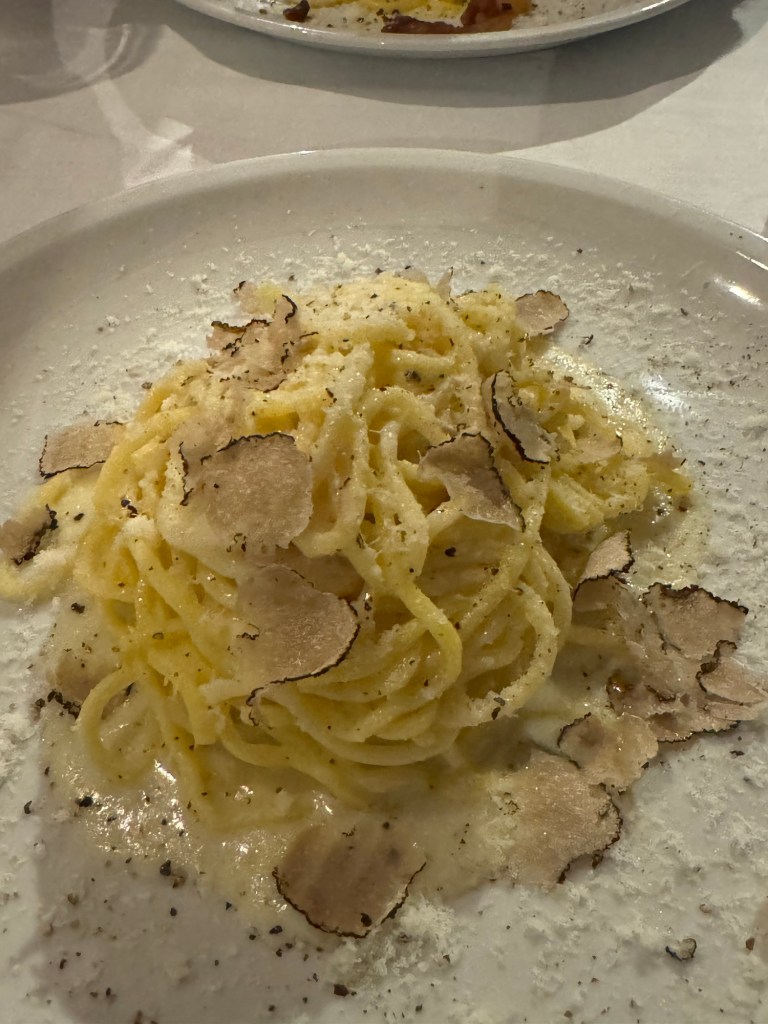
Taverna Lino is a popular restaurant just a few blocks from the Vatican Museum, and from our apartment. The ambiance is warm and inviting. We dined al fresco and enjoyed our first pasta dishes since we arrived. The first of many. The food in Italy is so good! Italian food is renowned worldwide for its delicious flavors and variety. It’s all about fresh ingredients, simple recipes, and a love for eating together. Italians also eat late in comparison to Americans. Restaurants stay lively even at 10 PM, and we loved the busy and vibrant food scene.


Google maps is an excellent tool to help you manage getting around in a city you’re unfamiliar with. For us, it was an invaluable tool. Although we didn’t need it to get to the Vatican Museum from our Airbnb as the museum was a short three minute walk away.
I can’t stress enough the value of purchasing “skip the line” tickets to major attractions. We had tickets to enter the museum first thing in the morning at 8:00 a.m. We arrived at 7:15 and noticed the line of visitors waiting to purchase their tickets was already very long. Our waiting area for skip the line tickets was completely empty. Tickets purchased directly at the museum are €20. Skip the Line with audio guide are €27 plus tax with Get Your Guide. Well worth the extra cost for the convenience and comfort. We had enough time to cross the street to the Vatican Cafe for some breakfast.


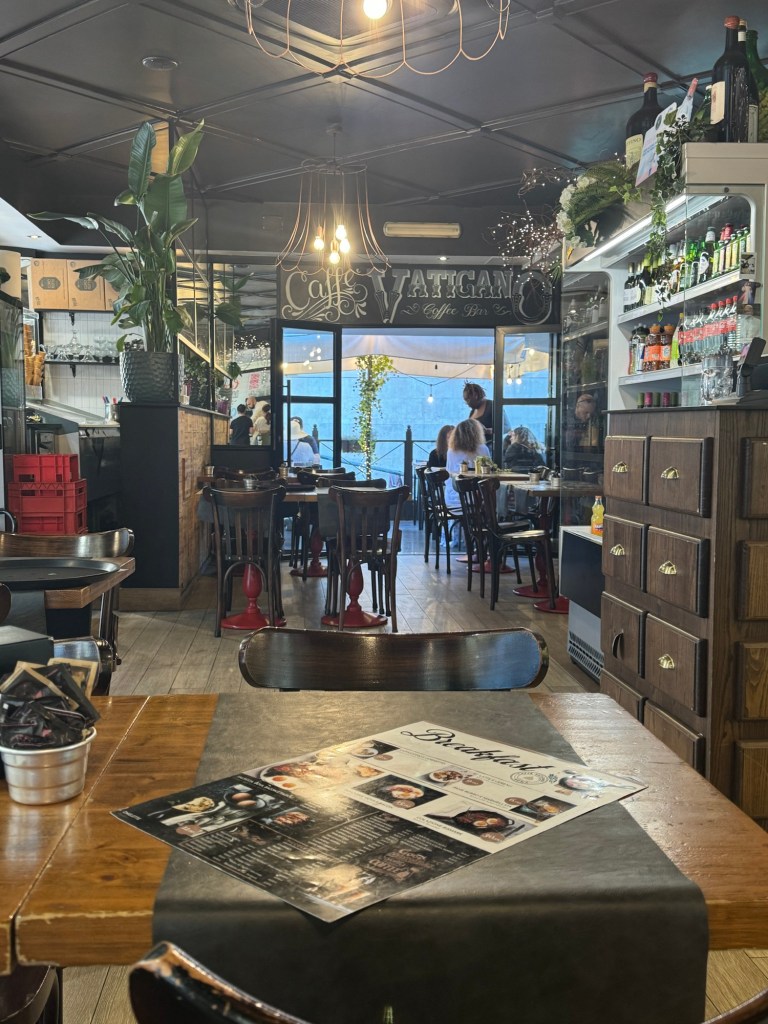
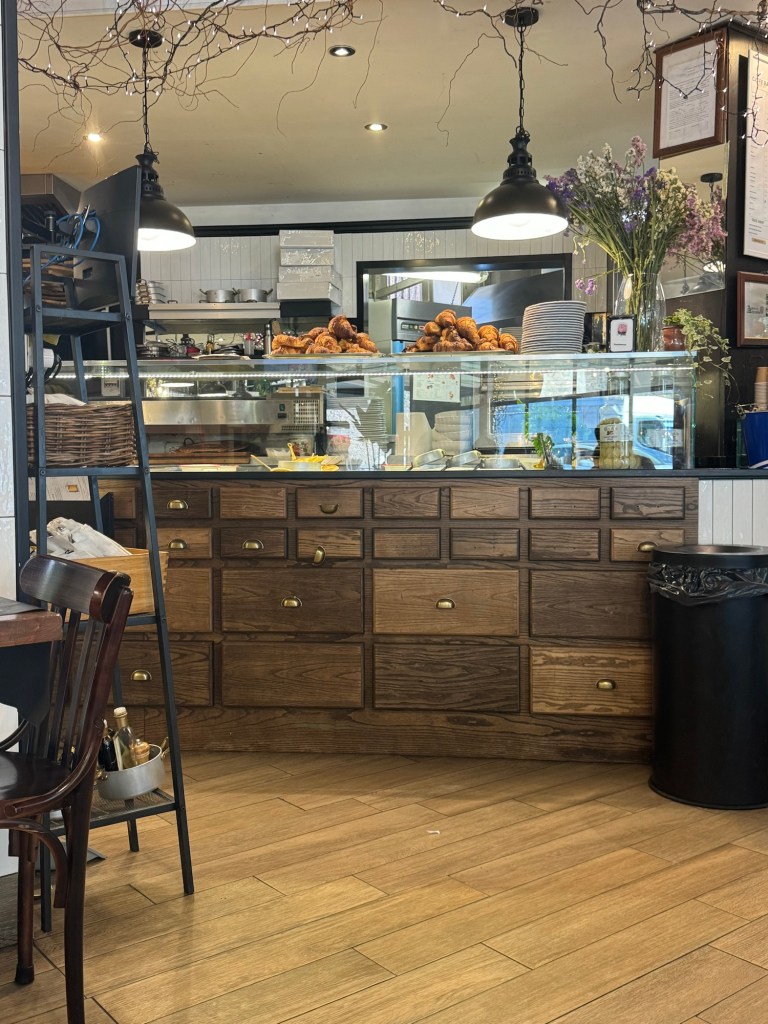
The Caffe Vaticano is located directly across the Vatican Museum. It is a convenient place to catch a quick breakfast before touring the museum. As expected, it is a bit overpriced because of the proximity to the Vatican. Overall, we enjoyed our Cafe Latte and Cornetto.


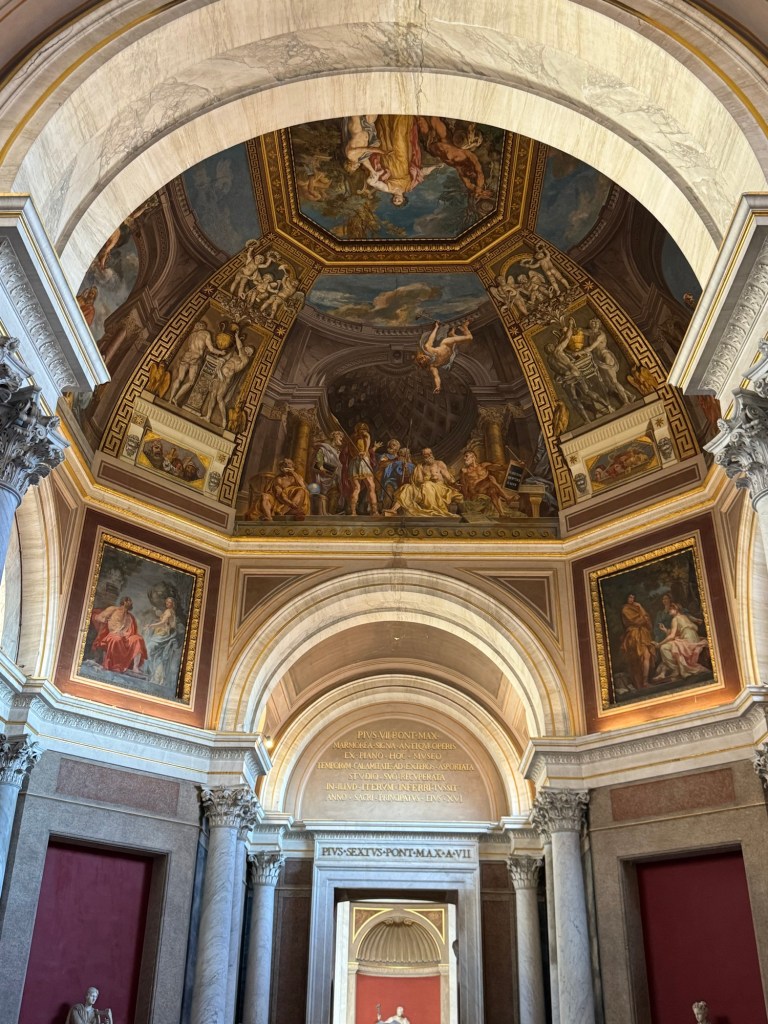
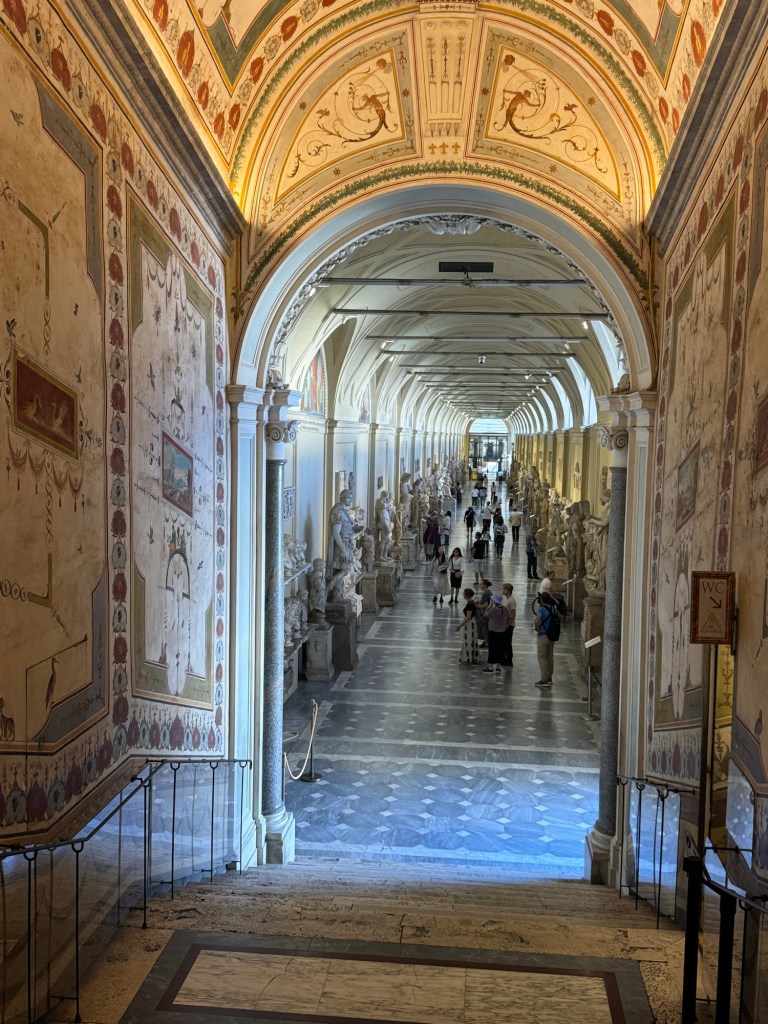
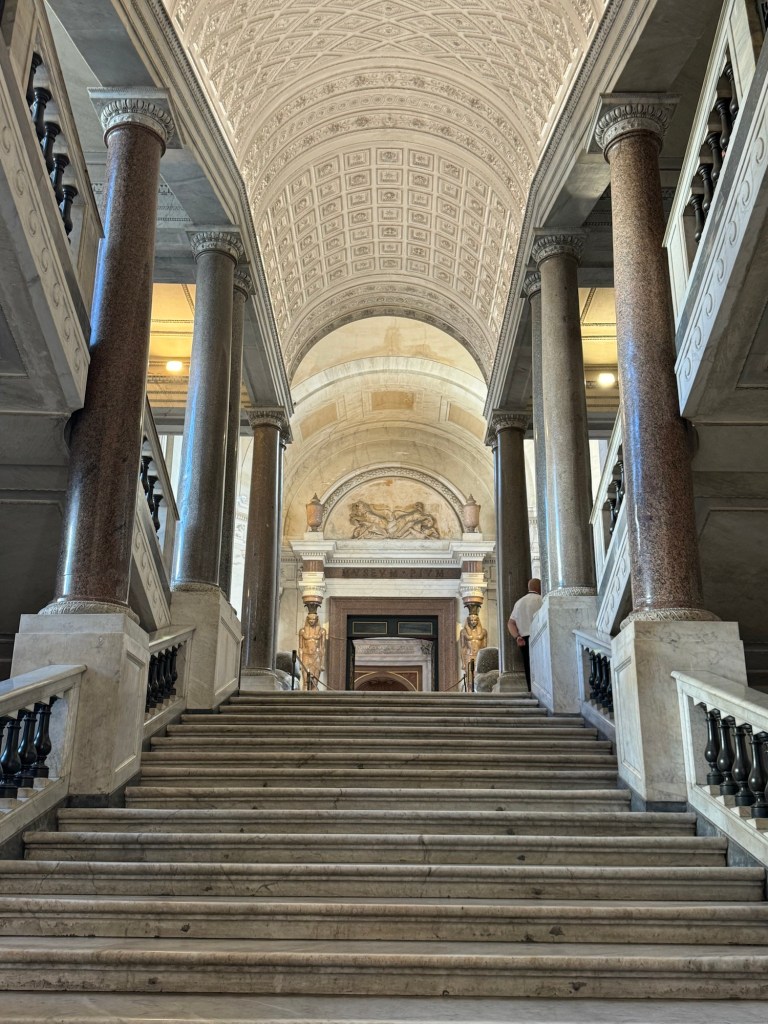
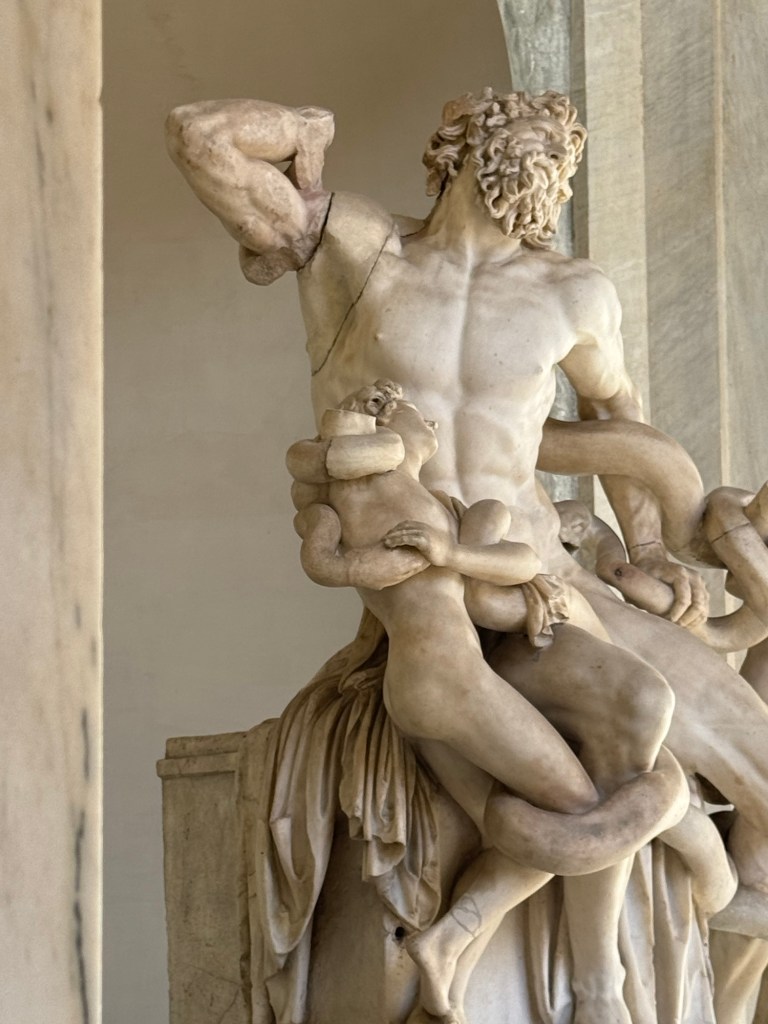
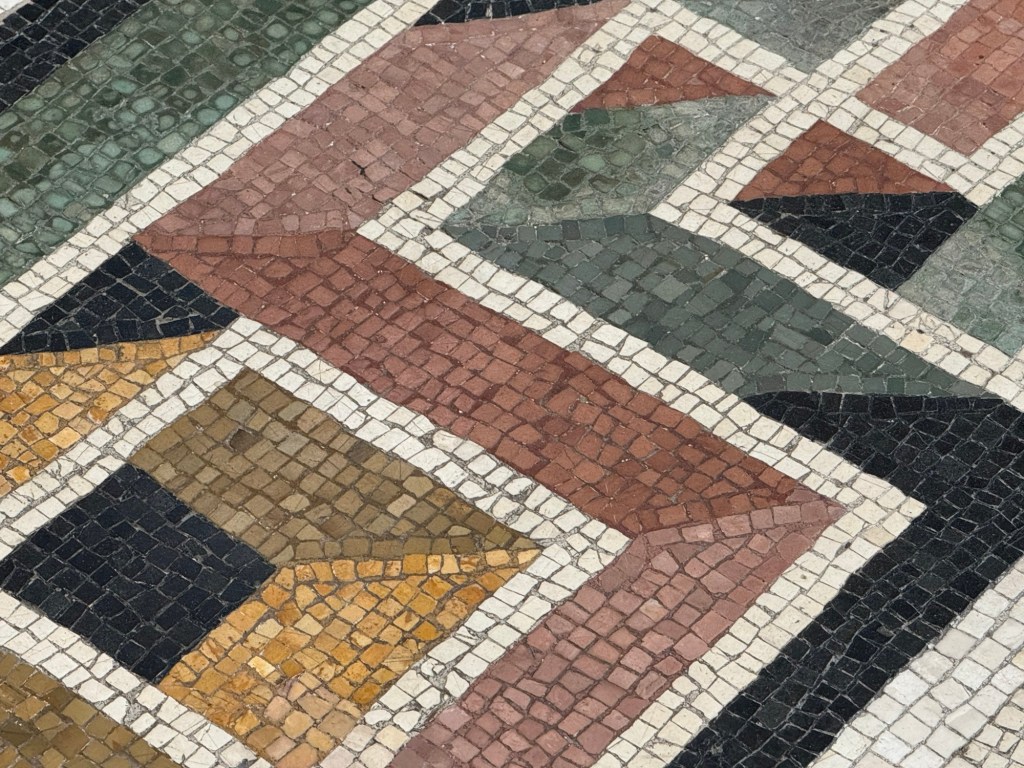
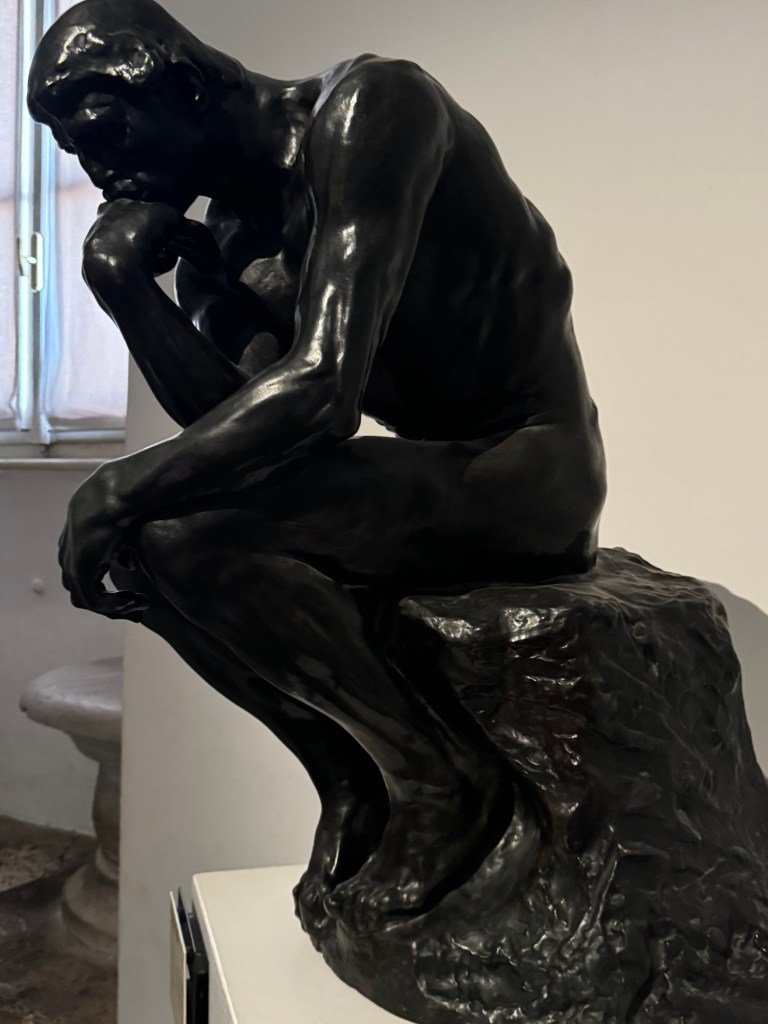
The Vatican Museums are a group of art and Christian museums located within Vatican City. They were founded in the early 16th century by Pope Julius II. The museums are renowned for their extensive collection of art and historical artifacts amassed by the Roman Catholic Church over centuries, including sculptures, paintings, and religious artifacts. Highlights include the Sistine Chapel, with its ceiling painted by Michelangelo, the Raphael Rooms, and the Gallery of Maps. The museums attract over 6 million visitors annually.
It’s hard to put into words the magnificence of the art and architecture of the Vatican Museums. To see the work of great masters like Michelangelo, Raphael, Da Vinci, Caravaggio and so many more is awe inspiring. The tour guides you through the many rooms ultimately ending at the Sistine Chapel. Here you can linger amongst the crowd of visitors to marvel at the frescoes painted by Michaelangelo. No photos allowed, and I was thankful for that. We too often lose the true experience by constantly worrying about getting that perfect photo. One important thing to know before you visit the Vatican is that you must dress appropriately. Shoulders and knees must be covered to enter the Vatican.






Trastevere is another neighborhood we explored and one of my favorites. A working class neighborhood with old world charm, a young bohemian vibe, graffitied walls, funky shops, and lively restaurants, Trastevere is a great place to explore.
The close proximity to the Tiber River made this neighborhood popular with fishermen and sailors. This area is centrally located with the Vatican City just a 20 minute walk to the North, and the Colosseum to the east.
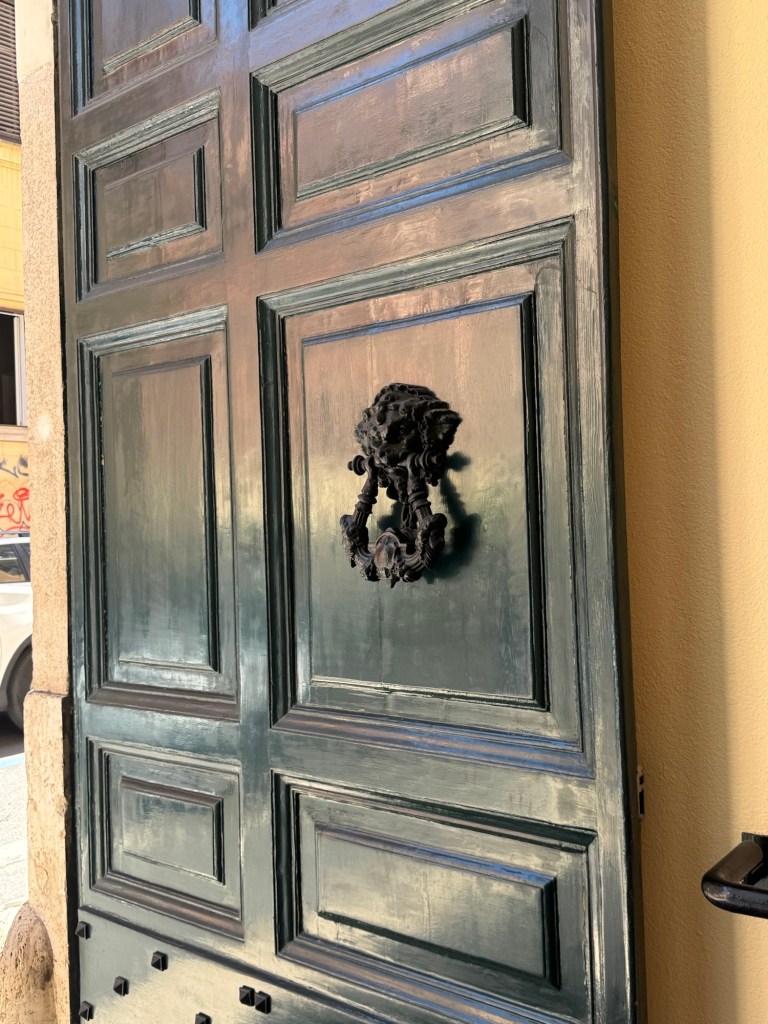
We loved walking through the cobblestone streets lined with colorful buildings that are centuries old.


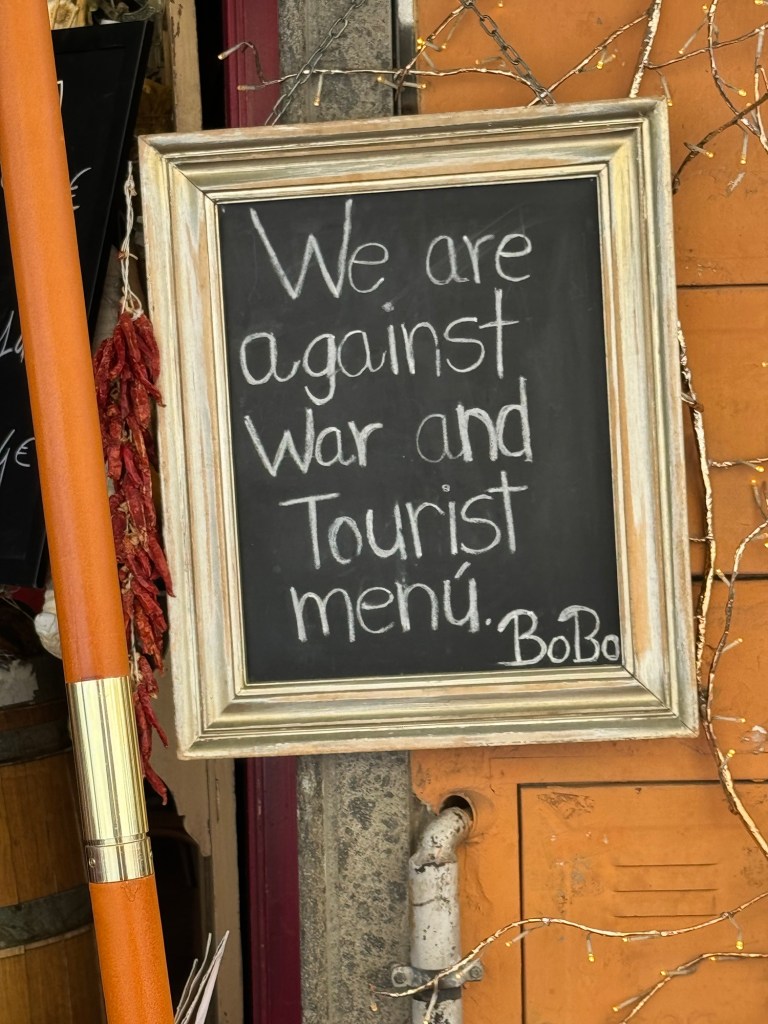
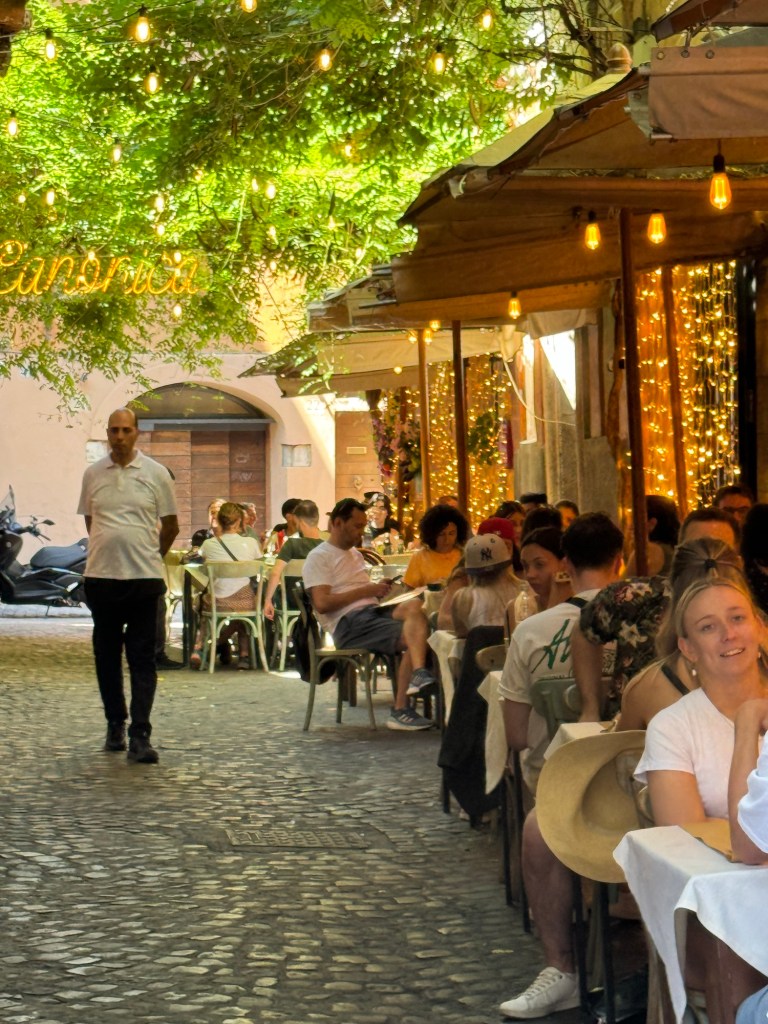

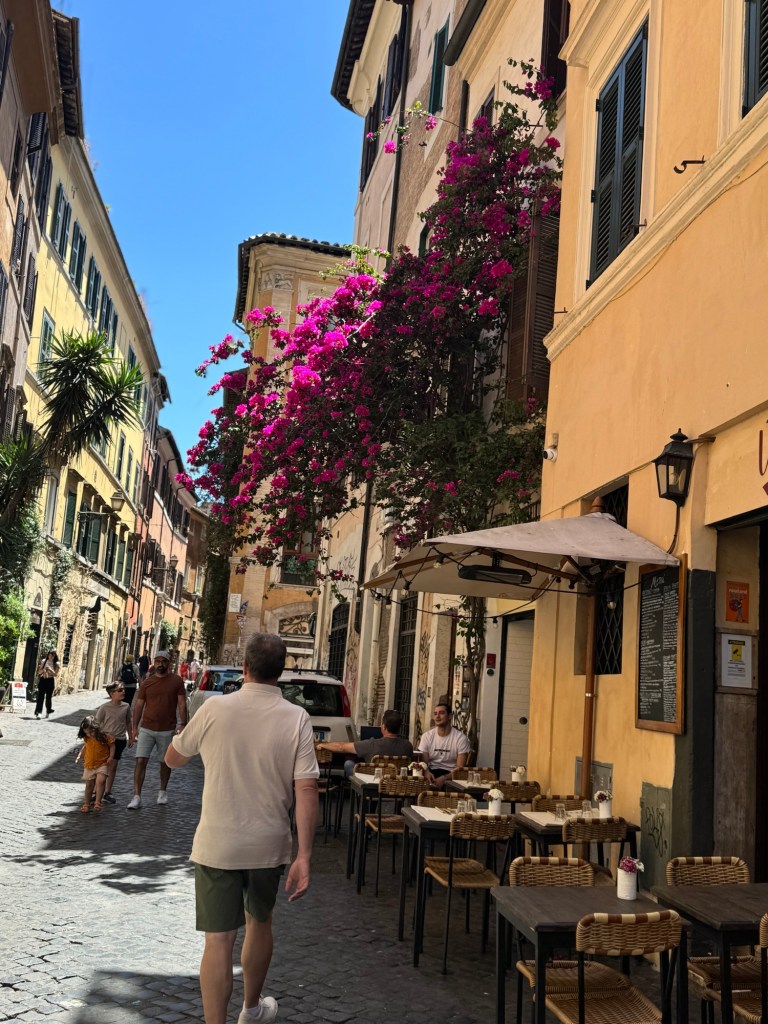


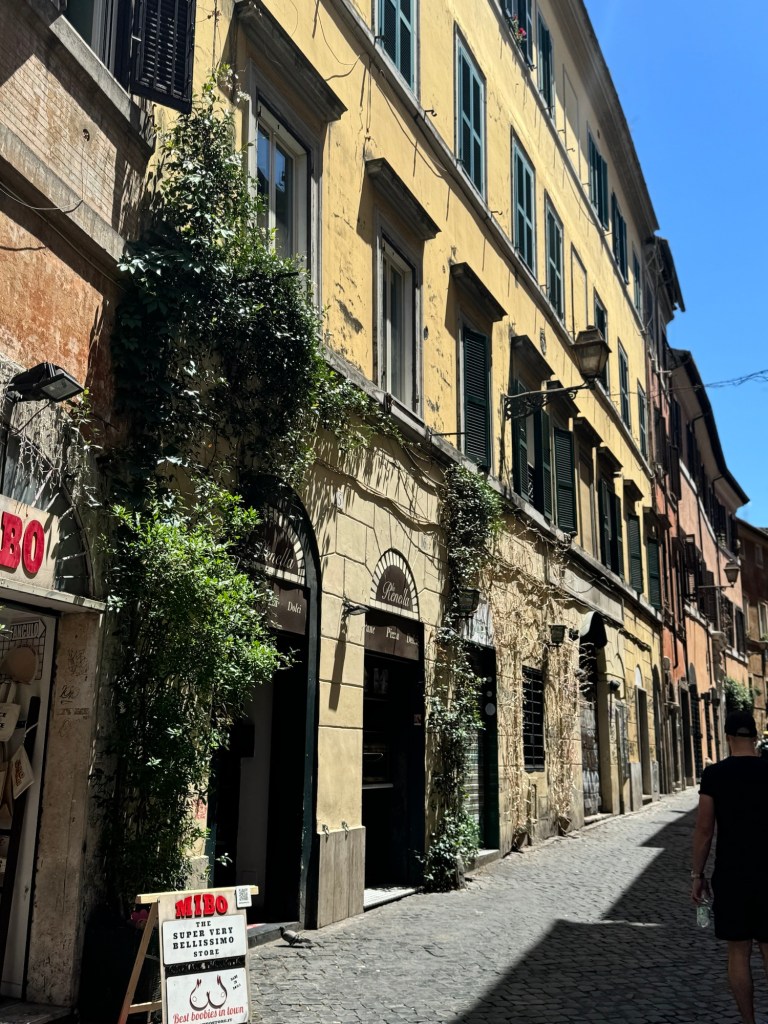
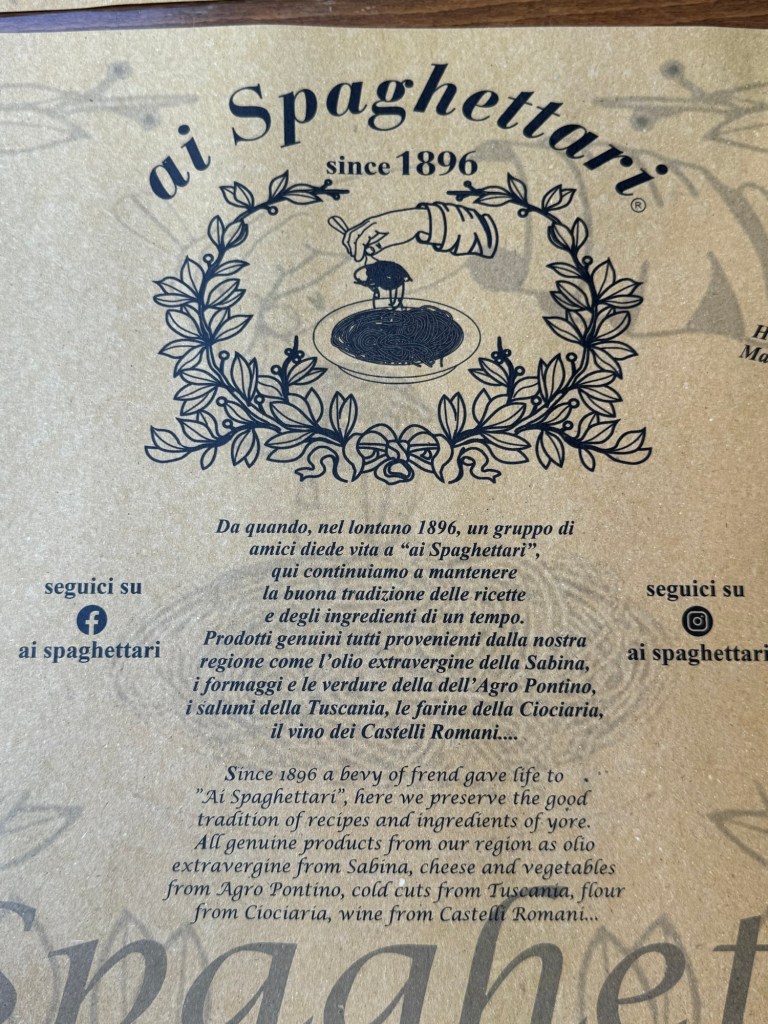
We were hungry. Time for pasta! Did I mention that Italian cuisine is my favorite? I was going to have my fill of Pasta on this trip. We stopped for a bite at Ai Spaghettari. Established in 1896, this is a great restaurant for a more local and authentic experience. The pasta was simple and delicious. I think the hubby enjoyed it too!


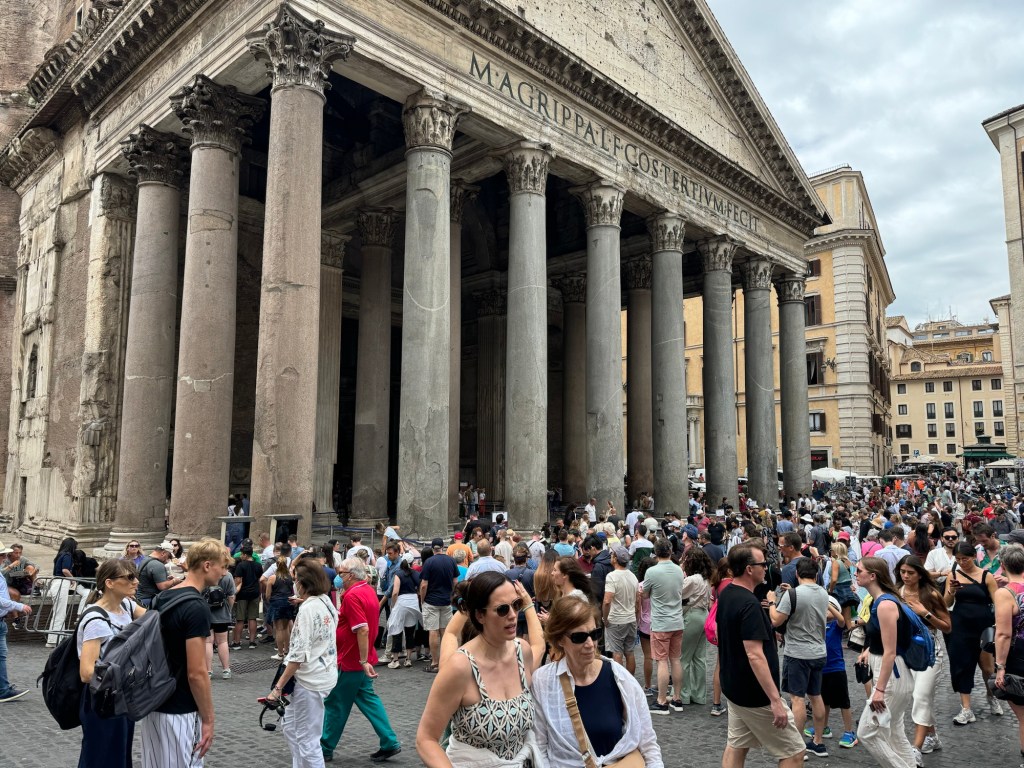
Rome is home to countless historic landmarks, but two standout attractions are the Pantheon and the Spanish Steps. The Pantheon, originally built as a temple for Roman gods and now a church, is distinguished for its architectural brilliance, especially its massive dome and central oculus that lets in natural light. This nearly 2,000-year-old structure is also the burial site for notable figures like the artist Raphael. The crowds in June are already intense, so the best advice we can offer is to start your day early to see any of Rome’s historical marvels.
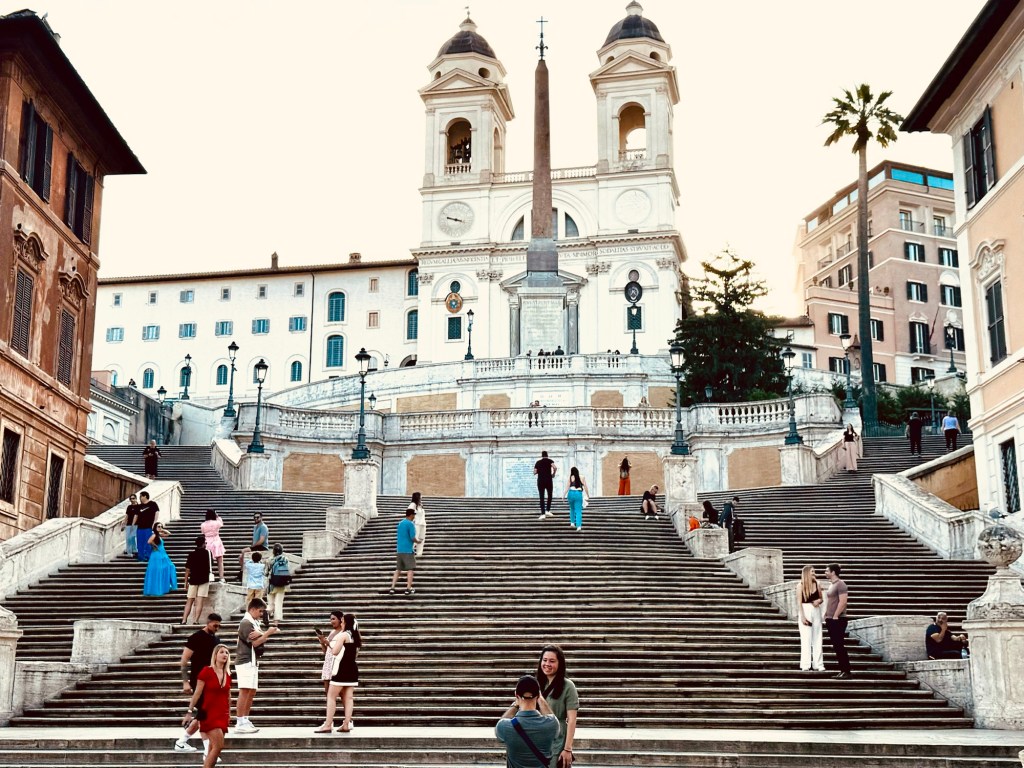
The Spanish Steps, another iconic site, consist of 135 beautifully designed steps connecting the Piazza di Spagna at the base with the Trinità dei Monti church at the top. Built in the 18th century, they offer a perfect spot for visitors to relax, take in the bustling city atmosphere, and enjoy picturesque views of Rome.

Rome was everything I romantically imagined it to be and more. It was the perfect starting point for our exploration of Italy. Not dedicating enough time to truly explore its many wonders, mistake #3.
Since I tossed a coin into the Trevi Fountain, I know in my heart that we will be back. But for now, arrivederci Roma, until we meet again.
















 Road Drifters